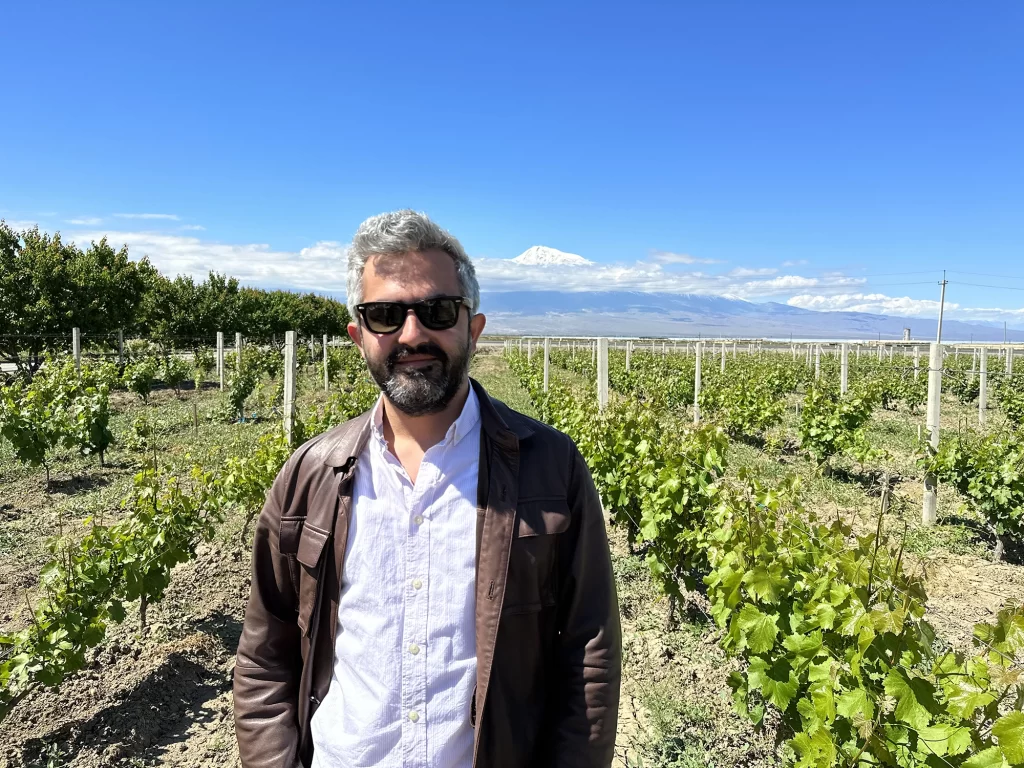
Tushpa
Words of Karlen Manasserian
Let me start with the name of the winery. Our winery is called Tushpa Wine Cellars. And why we have the word Tushpa here is because our ancestors came from Van, which is currently in Turkey. At that time a hundred years ago, during the genocide, our ancestors, my father’s grandfather, was living in Van. Van in ancient times was called Tushpa. That was also the capital city of the ancient Urartu kingdom (785–760 BC). So as an honor to our ancestors, my father, Mihran decided to name the winery Tushpa. So it’s kind of an honor for us but also a responsibility.Mihran’s grandfather who lived in Van used to work with different kinds of craftmanship and they were working with wood and also with some agriculture.
They also had a wine cellar, not for commercial purposes, but for just their own consumption. They had their own cellar. They made their wines. They used the grapes from that region, very much a kind of craft work. Mihran basically heard the stories from his father, like what they used to do there, and he always has been passionate about this industry, winemaking, and we have this tradition in Van. But also we have a very long history in Armenia of winemaking.
He always wanted to have some wine work here and to try to make something new. That’s why he started winemaking, that was in Soviet time. And when he graduated from the university he immediately went to Soviet-based wine and brandy factories and started to do winemaking there.
We just had brandy in Armenia because in Soviet time, despite all this old history of Armenia in winemaking, in Soviet times there was this strategy for Armenia to go in the brandy direction. Maybe at that time it was beneficial for Armenia from a Soviet perspective to produce brandy, but we had a lot of problems. We had a lot of issues in the vineyards because a lot of wine grapes were being replaced with brandy grapes, and as Armenia was going towards brandy we were in the direction where we may lose all this inheritance basically that we had.
So the winery was founded in 1992, right after the collapse of the Soviet Union, for a lot of people, for a majority of people in Armenia, that was a very difficult, very kind of like plague time.
NWe just had brandy in Armenia because in Soviet time, despite all this old history of Armenia in winemaking, in Soviet times there was this strategy for Armenia to go in the brandy direction. Maybe at that time it was beneficial for Armenia from a Soviet perspective to produce brandy, but we had a lot of problems. We had a lot of issues in the vineyards because a lot of wine grapes were being replaced with brandy grapes, and as Armenia was going towards brandy we were in the direction where we may lose all this inheritance basically that we had.
So my father was trying to go against this, and he tried to work with some farmers who had these wine grapes and requested that they keep their grapes and to not go towards this decision. And he promised them that he will always use their grapes because otherwise we may not have these grapes that we are using now. We still use their grapes.
Yes, we have our own vineyards, but still we use these farmers’ grapes. And this also gives us a kind of flexibility so we can decide which grapes to pick. I mean, whenever we have some issues with the climate that also gives us some freedom to be organic because you know that you have enough resources of the grapes and whenever something goes wrong, you always have a backup.
So the winery was founded in 1992, right after the collapse of the Soviet Union, for a lot of people, for a majority of people in Armenia, that was a very difficult, very kind of like plague time. We had a lot of issues in the country because that was like a post-first world war type of situation.
We had a lack of energy, we had a lack of food, a lot of issues and we didn’t have even simple, basic survival needs country-wide. And despite all these issues, Mihran decided to go towards his passion and decided to have his own wine business because he always since childhood wanted this. Since the stories that his grandfathers had told him, he always wanted to have this wine business to make Armenian wines from this region, and also to try to reflect his past and the story of his ancestors.
At that time, this land was just empty and the only thing that was here was just garbage. He started to clean the garbage and he used basically all his money for the land. He didn’t have any other money to buy grapes or plant his vineyards and make the wine.
So he started to do some other stuff, like distillate. He grew some grapes to make spirits to sell and make money, get some cashflow, and then invest in his own wine business. And only in 1999 did we have our first wines. So for seven, eight years we were kind of in a construction phase. I was a kid of eight years old.
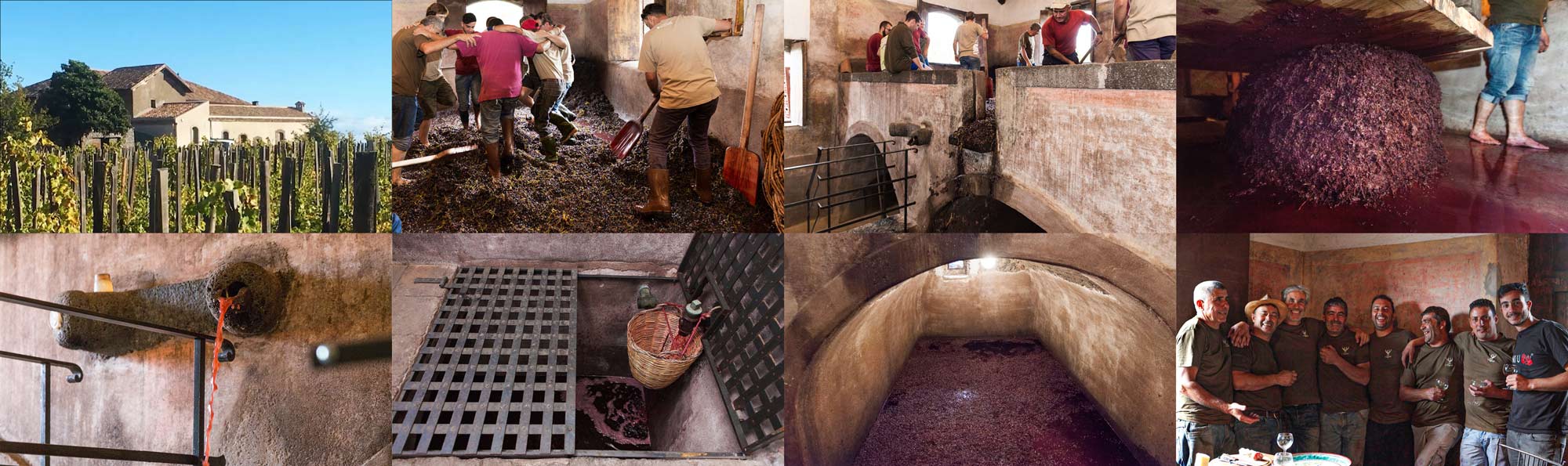
TAnd to now remember this process, we were here and trying to help our father. We are three children, my sister and my brother and I. And yes, I remember a lot of staff here and all the people that were brought in here were from our village, and that was quite a happy time. We didn’t have as many things as we have now, but that was a very happy time for us because we were on this wonderful journey and I’m very happy about that.
Back in 1999 in Armenia there were very few quality wines being made commercially. We had like three or four wines at the time. Now we have more than 100 producers in Armenia. So it was a very hard project at the time. Why? Because again, it was post-Soviet time. We had this strategy. We have the country itself, the population itself became more brandy-friendly, more brandy-oriented, and for Armenians at that time it was not so common to drink wine.
People were mainly used to drinking sweeter beverages. The wines at the time were sweet wines and port wines, because again, in Soviet times this was the idea for Armenia. But, we are happy that we have had our own input in the transformation of the market.
We are very happy now that Armenia is kind of back to its roots because, you know, we have this thousand years of winemaking tradition and we are very happy about that.
Now we produce around 50,000 bottles per year, and we export to six countries, but with small quantities. It’s important to mention because we are not more focused on quantity but on quality. And we try to find niche markets, not big supermarkets or these kinds of stores, but more niche markets where we can reach the wine enthusiast and those people who really want to try something new, want to try some unknown wines such as Armenia.
BUY THE WINE
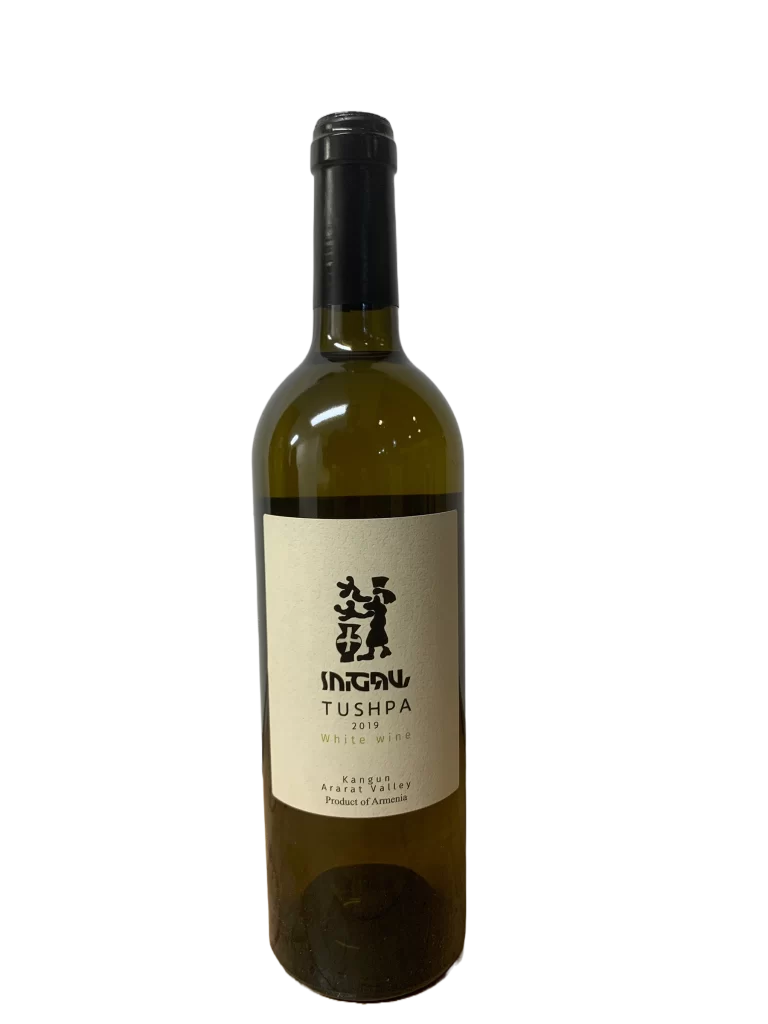
Tushpa Kangun 2019
The 2019 White has a complex nose of quince and floral notes. Apple and and mineral notes on the palate. A nicely concentrated wine with good legs and a smooth, crisp finish.
$18.99
Out of stock
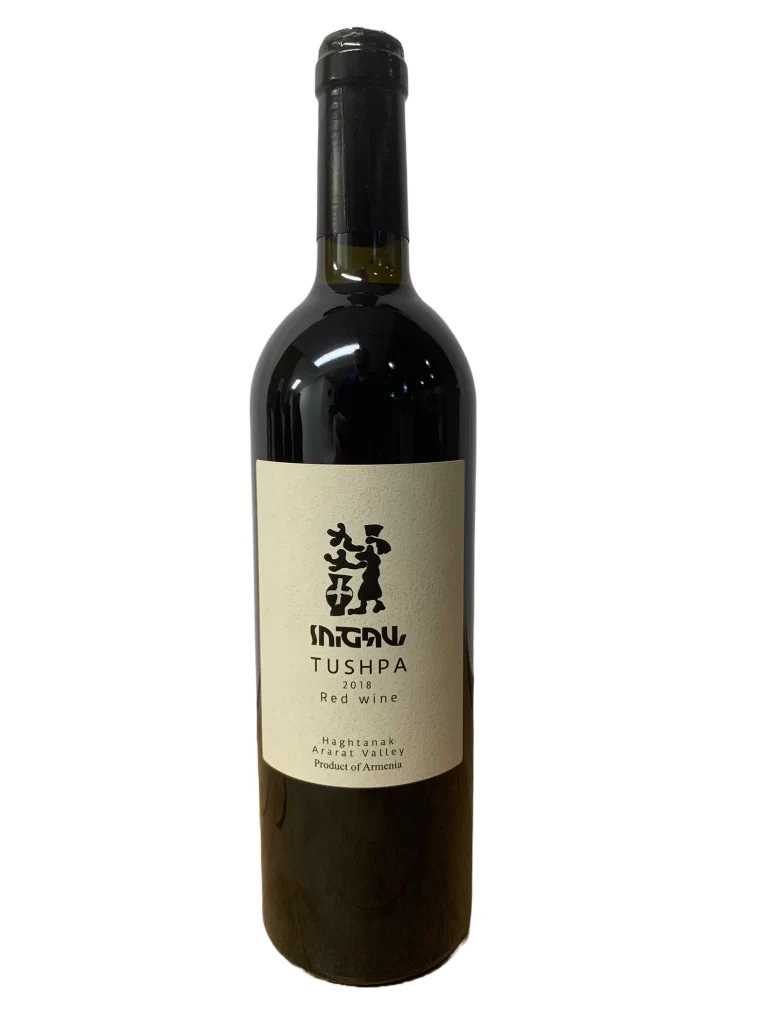
Tushpa Haghtanak 2018
The 2018 fourth vintage of its Haghtanak, the wine is deep purple to the rim. As it opens up, black fruit and herbal dominate the nose. On the palate the blackberry and plum combine with vanilla oak flavors. A medium bodied, tannic, well balanced wine.
$20.99
Out of stock
About
Amidst the scenic beauty of the Ararat Valley, nestled in the foothills of Mount Ararat, lies Tushpa Winery. Established in 1992, by Mihran Manasserian, Tushpa holds a prominent position within Armenia’s winemaking industry. Named after the ancient capital of the Urartu Kingdom, the winery draws inspiration from the region’s historical traditions.
Tushpa Winery is nestled below the Biblical Mt. Ararat, in Taperakan village at about 800 meters above sea level. The combination of clay and volcanic soils, ample sunshine, and cool mountain breezes creates an ideal environment for growing grapes with exceptional character. The winery has six hectares of vines and primarily cultivates indigenous grape varieties, such as Haghtanak which reflects the distinct terroir of the Ararat Valley.
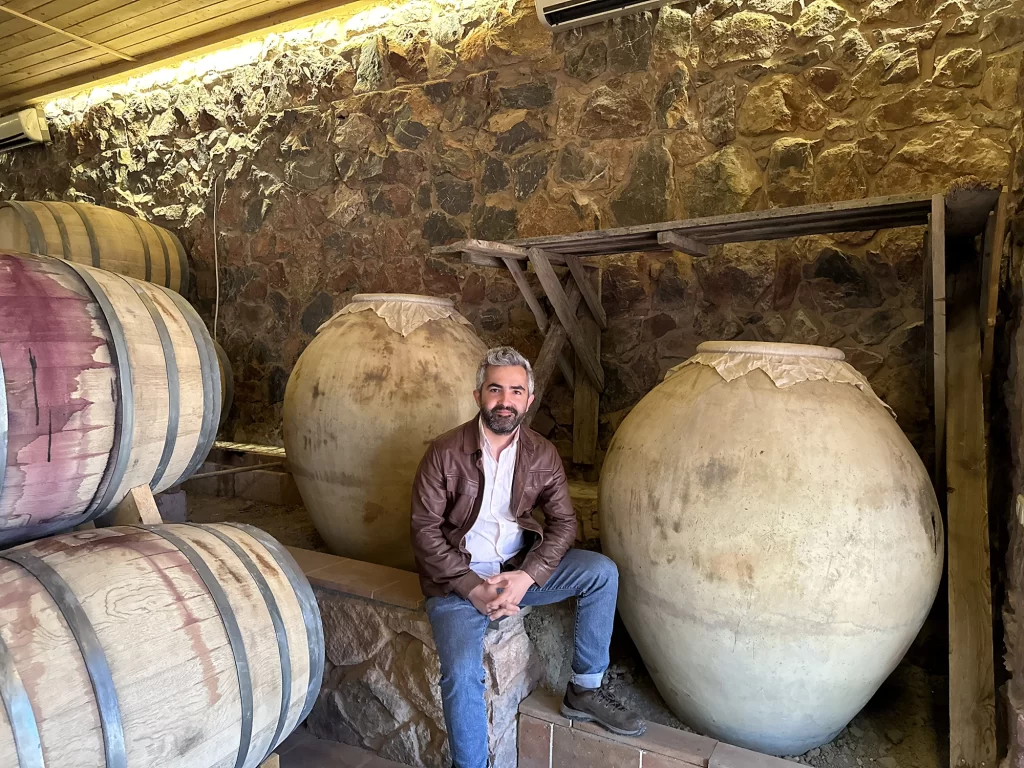
The winemaking process at Tushpa Winery combines traditional methods with modern technology. The grapes are fermented in stainless steel tanks or traditional clay vessels known as karases. Tushpa Winery is dedicated to organic practices, water conservation, and minimizing its ecological impact.
Karlen Manasserian of Tushpa on Historical Struggle and the Rebirth of Armenian Wine